
Community Safety & Wellbeing Survey
Why We’re Asking
Residents shared valuable insight in Phase 1 of the Public Safety & Wellbeing Survey, and several key priorities are beginning to emerge. These themes are still taking shape — and now we need your help to confirm whether they truly reflect what matters most. We also want to better understand which issues residents feel the City and its partners should focus on most urgently.
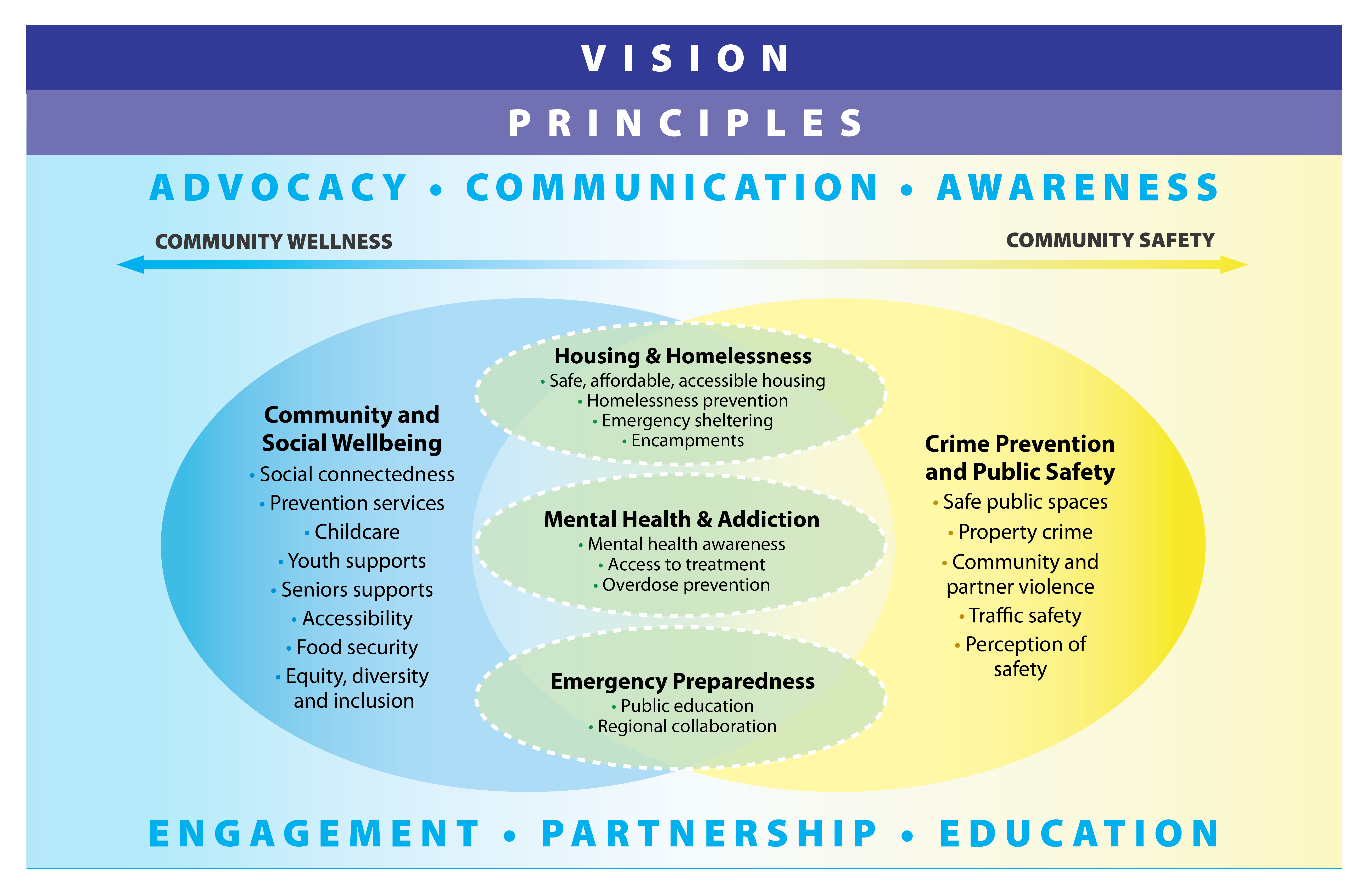
Phase 1 Emerging Community Safety and Wellbeing Themes
This short 8–10 minute survey is your opportunity to help shape the final priorities. Your input will directly guide Penticton’s Community Safety & Wellbeing Plan and help determine where the City and its partners focus their time and energy. Together, we can ensure Penticton remains safe, healthy, and connected.
Note: The City of Penticton respects your privacy and is committed to protecting your personal information. Your personal information will be collected and only used for the purpose of the gathering feedback on the Community Safety and Wellbeing Survey and possible improvements pursuant to Section 26(c) of the Freedom of Information and Privacy Act. If you have any questions about the collection, access, use or disclosure of your personal information, please contact Corporate Officer/Head of FOIPPA at foi@penticton.ca or 250-490-2400.